

Crisis Leadership Briefs
Click the infographic pictures below to download
Introduction
Prepare Leaders. Respond with Confidence. Recover with Resilience.
Leadership decisions during a crisis can significantly influence employee well-being, organizational stability, business continuity, and recovery outcomes. Critical Incident Response Services (CIRS) helps organizations strengthen crisis preparedness, critical incident response, organizational resilience, and workforce recovery through practical leadership guidance, planning, consultation, and response strategies. Whether preparing for a workplace crisis, managing an active disruption, or supporting recovery afterward, CIRS helps leaders recognize emerging concerns, make informed decisions under pressure, support employees, and restore stability with confidence.
The Crisis Leadership Briefs below provide concise, actionable insights on crisis leadership, workplace resilience, critical incident preparedness, and recovery strategies to help leaders strengthen readiness before disruption, respond effectively during a crisis, and support long-term organizational recovery.

Crisis leadership requires a fundamentally different approach than traditional leadership, emphasizing rapid decision-making, clear direction, workforce protection, and operational continuity amid uncertainty and disruption.
Click HERE to download a one page executive summary.
Prepare

Organizations that prepare for both the human and business impacts of disruption are better positioned to protect people, maintain operations, and recover with resilience.
Click HERE to download a one page executive summary.

Leaders can improve crisis performance by understanding their natural fight, flight, or freeze tendencies, building and rehearsing crisis response capabilities in advance, and preparing themselves and their teams to act calmly and decisively under pressure.
Click HERE to download a one page executive summary.

Just as preventive healthcare reduces emergencies, early identification of organizational risks strengthens resilience and crisis preparedness.
Click HERE to download a one page executive summary.
Respond
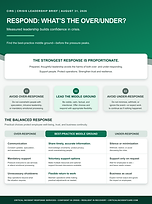
Effective crisis leadership requires a balanced, proportionate response that avoids the harms of both overreacting and underreacting while supporting people, protecting operations, and building trust.
Click HERE to download a one page executive summary.

The goal of crisis leadership is not rigid compliance with protocols and plans, but successful adaptation to changing conditions while protecting people and operations.
Click HERE to download a one page executive summary.

Organizations that combine early crisis detection with rapid, evidence-informed intervention can reduce psychological harm, maintain workforce performance, and accelerate recovery following disruptive events.
Click HERE to download a one page executive summary.
Recover

Effective crisis recovery extends beyond restoring operations to rebuilding employee well-being, trust, resilience, and organizational strength over the long term.
Click HERE to download a one page executive summary.

Organizations recover stronger from adversity when leaders foster adaptability, collaboration, and continuous improvement.
Click HERE to download a one page executive summary.

Organizations recover more effectively when leaders rapidly connect employees needing higher levels of care to trusted resources, reducing long-term human and operational impacts.
Click HERE to download a one page executive summary.